

It’s 3am and you’ve woken with a throbbing tooth and a puffy cheek, and you need emergency dental help in Geebung. Maybe a molar cracked on a crust at dinner last night. Either way, sleep isn’t coming back soon.
Many dental problems get worse, not better, when you leave them. That’s why our clinic makes room for urgent cases, with a same day appointment where our schedule allows. Call 3865 7900, tell us what’s happening, and we’ll take it from there.
Our dental team eases severe pain first. Then we explain your options in plain words, so you can pick a plan that protects the tooth. Your first step is knowing whether your problem really can’t wait.
Key Takeaways
- Pain that stops you sleeping, eating or working counts as an emergency.
- A knocked-out adult tooth has the best chance of being saved if you act fast.
- Never put aspirin or other tablets directly on your gum.
- We ease your pain first, then talk you through your options.
- You’ll know the cost before any treatment starts.
- Call 000 for trouble breathing or swallowing, or bleeding that won’t stop.
Signs Your Tooth Problem Can’t Wait
If tooth pain stops you sleeping, eating or working, treat it as a dental emergency and call us today. A severe toothache that doesn’t settle with over-the-counter pain relief can point to infection or nerve damage. These problems rarely go away on their own.
One common cause is a dental abscess. This is a pocket of pus caused by a bacterial infection at the root of a tooth or in the gum. It often brings throbbing pain, swelling or a bad taste.
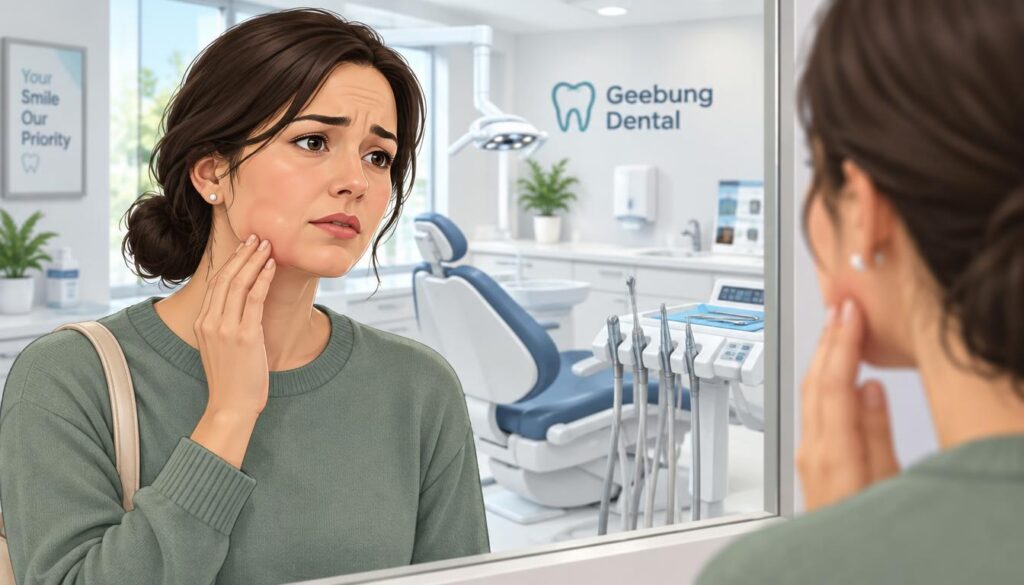
Ring us the same day if you notice any of these signs:
- Severe or lasting toothache that pain relief doesn’t help
- Facial swelling near your jaw, cheek or eye
- A broken, cracked or chipped tooth that feels sharp or sore
- A knocked-out tooth after a fall or a knock at sport
- Signs of a dental abscess, such as throbbing pain, a bad taste or fever
- A lost filling or crown that leaves the tooth sensitive
Fever with tooth pain suggests an infection that may be spreading. Pain that comes and goes can still mean a problem underneath. Pain that fades is not a sign the problem is fixed.
When tooth pain fades, the problem hasn’t gone away. A dying nerve can go quiet while an infection keeps growing.
If you’re unsure, a quick call to our team helps you decide. In the meantime, there’s plenty you can do at home to protect the tooth.
What to Do Before You Reach Our Clinic
With a knocked-out tooth, speed matters most, so act within minutes, not hours. For other problems, simple first aid can ease pain and stop more damage to your teeth. Whatever happened, bring the tooth or any broken piece when you call 3865 7900 and come in.
Below are the steps for the three most common problems. Keep them handy, as they work best when you follow them straight away.
Knocked-Out Adult Tooth
Pick the tooth up by the crown, the white part you chew with. Never touch the root. If it’s clean, push the adult tooth gently back into its socket and bite on a soft cloth to hold it.
If it won’t go back in, store it in milk, saline or a tooth preservation product. Don’t scrub it or let it dry out. The NSW Health Emergency Care Institute guide to dental emergencies also lists a knocked-out adult tooth as an emergency.
There’s one firm rule: never put a baby tooth back in. Pushing it in can harm the adult tooth growing underneath. Keep the baby tooth and bring your child in to be checked.
Severe Toothache or Facial Swelling
Rinse your mouth with warm, salty water to clean the area. Take over-the-counter pain relief as the packet directs. A common mistake is putting aspirin on the gum, which can burn the soft tissue, so never do it.
For swelling, hold a cold compress on the outside of your face. Never use heat, as it can make an infection spread faster. Try not to sleep on the sore side.
Broken Tooth, Lost Filling or Crown
Keep any broken pieces in a clean container and bring them with you. Avoid chewing on the damaged tooth until we’ve seen it. Soft food on the other side of your mouth is your friend for now.
Lost fillings and crowns leave the tooth open to pain from hot, cold and sweet foods. Temporary dental cement from a pharmacy can cover the gap for a day or two. Once you’re in our chair, here’s what treatment can look like.
Emergency Dental Geebung Treatments We Offer
Most emergency visits end with you out of pain the same day. Your emergency dentist first stops the pain, then deals with the cause. Some problems need a follow-up visit to finish the job properly.
Here’s how common problems usually play out:
| Problem | Likely first treatment | Possible follow-up |
|---|---|---|
| Severe toothache | Numbing and pain relief | Filling or root canal treatment |
| Dental abscess | Numbing and drainage | Root canal treatment or extraction |
| Cracked or broken tooth | Smoothing or temporary filling | Bonding or crown |
| Lost filling or crown | Temporary filling or re-cementing | New filling or crown |
| Knocked-out adult tooth | Putting it back and splinting | Root canal treatment |
Pain Relief and Infection Control
Emergency dental care starts with numbing the area so you can relax. If you have an abscess, we may drain it to release the pressure. That alone often brings big relief within minutes.
We prescribe antibiotics only where an infection is spreading. Antibiotics don’t fix the source of an infection on their own. The tooth still needs treatment, or the infection tends to come back.
Emergency Fillings, Repairs and Crowns
A broken tooth or lost filling usually gets a temporary filling first. This seals the tooth and stops the sensitivity. Later, we can rebuild it with bonding, a new filling or crowns.
These repairs are part of our wider general dental care, which also covers bridges and check-ups. That means the dentist who treats your emergency can also finish the repair.
Root Canal Treatment and Extractions
When infection reaches the nerve, root canal treatment can save the tooth. We clean out the infected tissue inside the root and seal it. Often we start this on the day and plan the rest for a second visit.
Saving the tooth always comes first in our dental services. Extraction is the last option, kept for a tooth that can’t be restored. Here’s how the visit itself runs from the moment you call.
How Your Emergency Appointment Works
A typical call goes like this: “I cracked a tooth at lunch and it hurts to drink water.” Our emergency dental clinic team asks a few quick questions, then gives you a time. Calling early in the day gives you the best chance of a same day appointment.
Here’s what happens from that first call:
- Call 3865 7900 and describe your symptoms.
- Get first aid advice and an appointment time.
- Receive pain relief soon after you arrive.
- Have an exam and any X-rays you need.
- Hear your options clearly, then agree on treatment.
Nothing goes ahead until you agree to it. Our patients often tell us that clear talk makes a stressful day feel easier. You can read more about how we care for people on our About Us page.
Walking in without calling risks a long wait, as we may already be treating other urgent cases. Ringing first lets us plan your care and keeps your experience smooth. Children need a slightly different approach, though.
Help for Children With a Dental Emergency
Your child trips on the playground, hits the slide and comes up crying with a bleeding mouth. Stay calm, check whether the tooth is a baby tooth or an adult tooth, and call us. That one detail changes what you do next.
Common dental emergencies in children include knocked-out or pushed-out teeth from falls or sport. Trauma to baby teeth and toothache from decay are also common. Here’s a quick guide:
| Situation | Baby tooth | Adult tooth |
|---|---|---|
| Knocked out | Don’t put it back, see a dentist | Put it back or store in milk, come in now |
| Chipped | Check for sharp edges | Keep the fragment |
| Toothache | Check for decay | Check for decay or infection |
A knocked-out baby tooth is never put back in. Doing so can damage the adult tooth forming beneath it. We still want to see your child, to check the gum and nearby teeth.
Our dental team keeps things gentle and calm for young patients. We explain each step in words a child understands and go at their pace. Parents often ask about cost next, so let’s cover that.
Fees, Health Funds and Payment Options
You’ll know the cost before anything starts, because we explain fees before any treatment. If the price changes during your visit, we stop and talk it through first. That way, payment never comes as a surprise.
We’ll also talk about payment options while you’re here. Our goal is to get you out of pain without adding money stress to a hard day.
What Affects the Cost of Your Visit
The cost of an emergency visit depends on three things. The first is the problem itself, as a simple repair costs less than an abscess. The second is the tests you need, such as X-rays.
The third is whether treatment finishes in one visit. Some treatments, like root canal work, often take two or more appointments. We’ll tell you upfront if your care is likely to need follow-up.
Health Fund Claims and Public Dental Help
Private health cover with extras can lower your out-of-pocket costs. We give you item numbers, which are codes your fund uses to work out your claim. You can ring your fund with these numbers before treatment if you like.
You can get free dental in Brisbane through Queensland public oral health services if you hold an eligible concession card. This includes a pension or health care card. Wait lists apply for non-urgent care, so urgent problems are seen sooner.
For children aged 0-17, the Medicare Child Dental Benefits Schedule covers basic dental services for those who are eligible. To fix bad teeth with no money in Australia, start with public dental or this schedule for kids. Both protect your health and keep dental care within reach. If it’s after hours, here’s where to turn.
Dentist or Hospital: Where to Go After Hours
Most dental pain can wait until morning with good first aid. A few symptoms can’t, because a spreading infection can block your airway. Knowing the difference saves time and keeps you safe.
Call 000 or go to the nearest hospital emergency department if you have any of these issues:
- Trouble breathing or swallowing
- Heavy bleeding that won’t stop
- A serious injury to your face or jaw
- Swelling that spreads fast, with a fever
Swelling that moves toward your eye or neck needs urgent medical care, even in the middle of the night. Don’t wait for a dental appointment with these signs. Hospital staff can protect your breathing and start treatment straight away.
If swelling spreads toward your eye or neck, or you struggle to breathe or swallow, go to hospital now.
For any other urgent dental pain, use the first aid steps at home and call us first thing next day. A cold compress and pain relief can carry most people through the night. For anything less serious than a hospital case, our team is the next step for your oral health.
Conclusion
You don’t have to put up with tooth pain. A visit to an emergency dentist early often saves the tooth and spares you bigger treatment later. Waiting tends to turn a simple filling into a root canal or an extraction.
Our team sees urgent dental problems with care and keeps you in the loop at every step. We ease the pain first, then help you choose what comes next. You’ll always know your options and costs before we start.
If your tooth is cracked, swollen or keeping you awake, don’t sit on it. Call our clinic on 3865 7900 to book your appointment. We’ll find you the earliest time we can.